
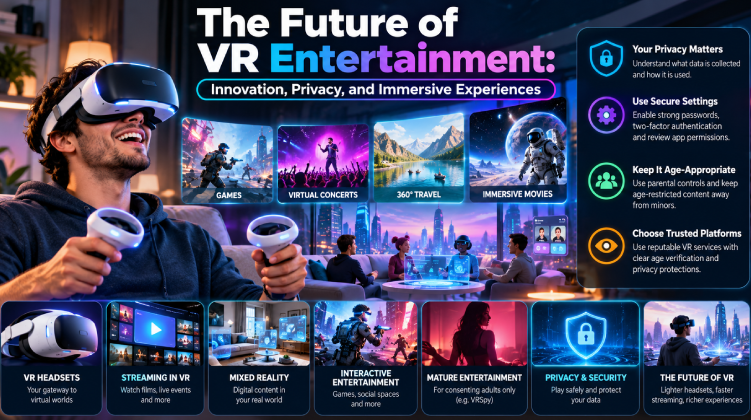

Virtual reality has changed the way people experience digital entertainment by placing them inside games, videos, concerts, and virtual spaces. With a VR headset, users can enjoy immersive streaming, mixed reality, and interactive content from home. Platforms such as VRSpy and vrspy.com are part of this growing VR entertainment landscape, which also raises important questions about privacy and responsible access.
What Is VR Technology?
VR technology creates computer-generated environments that respond to a user’s movements in real time. Headsets, sensors, controllers, and spatial audio work together to make users feel present inside a digital world. This sense of presence is what separates VR from ordinary screen-based entertainment.
VR Headsets as the Gateway
VR headsets are the main gateway to virtual worlds. They combine high-resolution displays, motion tracking, and audio to deliver an immersive experience. Standalone, PC-connected, and mixed reality headsets each offer different levels of comfort, performance, and content access.
Streaming in Virtual Reality
Streaming has made VR entertainment more convenient by allowing users to watch content without storing large files on their devices. VR users can stream films, games, live events, and immersive videos directly through headset browsers or apps. Services such as VRSpy offer both streaming and download options, depending on the user’s internet connection and storage needs.
The Rise of Mixed Reality
Mixed reality blends virtual objects with the real physical environment. Using cameras and sensors, MR headsets can place digital screens, characters, or tools into a user’s actual room. This technology is expanding beyond gaming into education, work, design, training, and interactive entertainment.
Digital Entertainment in VR
Digital entertainment is becoming more personal and interactive through VR. Users can attend virtual concerts, explore 360-degree documentaries, play social games, or watch immersive videos in a private virtual theater. The format supports many content types, including education, fitness, travel, gaming, and mature entertainment for consenting adults.
Mature Entertainment in VR
VR also includes mature entertainment intended only for legal adults. Platforms such as VRSpy, available through vrspy.com, operate in an age-restricted category where clear warnings, secure access, and privacy protections are essential. Responsible adult VR services should use age verification and avoid exposing users’ personal information.
Why Privacy Matters in VR
Privacy is especially important in VR because headsets can collect detailed data about movement, room layout, voice, eye activity, and app usage. This information may improve performance, but it can also reveal sensitive personal details. Users should understand what data is collected, how it is stored, and whether it is shared with third parties.
How to Stay Safe in VR
Users can protect themselves by reviewing privacy settings, using strong passwords, enabling two-factor authentication, and avoiding unnecessary permissions. A separate email address and secure payment method can also help protect personal accounts. Parents should use parental controls and ensure that age-restricted VR content remains inaccessible to minors.
The Future of VR Entertainment
The future of VR will be shaped by lighter headsets, faster streaming, richer mixed reality experiences, and stronger privacy standards. As immersive media grows, users will expect both high-quality entertainment and transparent control over their data. The most successful VR platforms will be those that combine innovation with safety, consent, and trust.
Conclusion
VR technology is transforming digital entertainment by making content more immersive, interactive, and personal. From streaming and mixed reality to mature entertainment on platforms like VRSpy, the industry is expanding quickly. Its long-term success will depend on protecting user privacy while delivering safe and engaging virtual experiences