
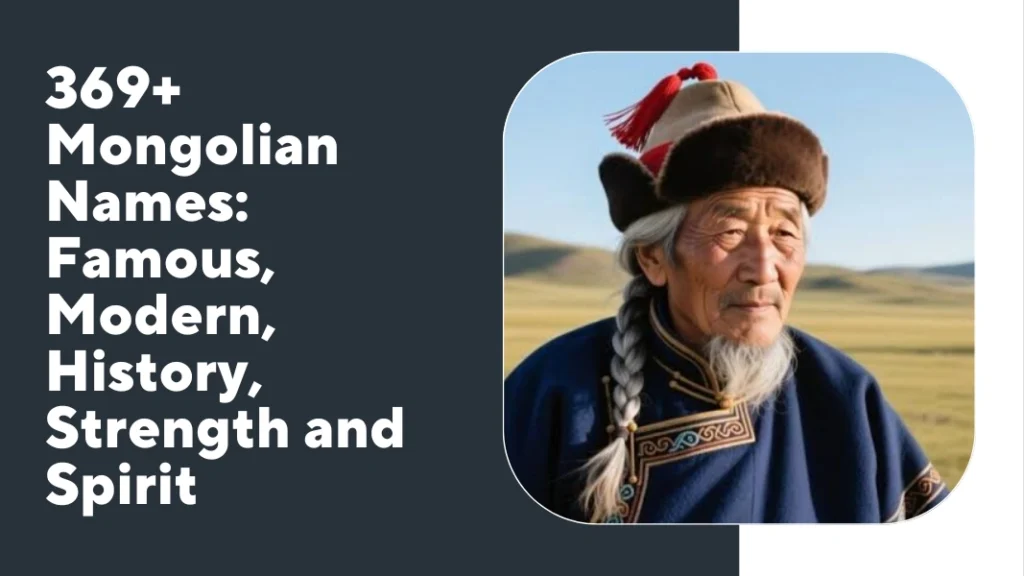

Mongolia’s naming traditions carry echoes of open grasslands, powerful dynasties, Buddhist influence, family hopes, and a culture shaped by centuries of resilience. Mongolian Names can therefore feel strikingly different from the familiar choices found in Western naming lists.
Some sound graceful and poetic, while others suggest courage, wisdom, strength, prosperity, or nature. This collection is designed for parents, writers, gamers, students, world-builders, and anyone curious about names connected with Mongolian language and culture.
You’ll find feminine and masculine choices alongside princess-inspired, warrior, tribal, and fantasy options. For fictional categories, some entries are deliberately Mongolian-inspired creations rather than documented traditional personal names, helping you distinguish cultural naming inspiration from imaginative world-building.
Why A Powerful Name Leaves A Lasting Impression
A memorable choice can communicate heritage, personality, strength, or even an entire character story before anything else is revealed. Mongolian Names are especially compelling because many draw inspiration from qualities such as wisdom, courage, beauty, nature, longevity, and good fortune. Understanding the intended setting also helps you decide whether an authentic historical choice or a fictional Mongolian-inspired creation fits better.
Mongolian Princess Names
Royal-inspired choices deserve elegance, authority, and historical depth, so this collection blends documented feminine names with regal options suited to princess characters and noble storytelling.
- Börte
- Khulan
- Yesügen
- Yesüi
- Alaqai
- Checheyigen
- Töregene
- Oghul Qaimish
- Sorghaghtani
- Doquz
- Mandukhai
- Samur
- Tümen Zasagt
- Altani
- Al Altan
- Qutui
- El Qutlugh
- Bulughan
- Kököchin
- Bayalun
- Qutugh
- Qutulun
- Orghana
- Chabi
- Nambui
- Buluqhan
- Kelmish
- Kutlug
- Tului Qutlugh
- Kebek Khatun
- Tughanchuk
- Toghanchuk
- Qutlugh Malik
- Arighun
- Tödeimergen
- Yisüder
- Tsolmonjin
- Sarantuyaa
- Altansarnai
- Naranjargal
- Enkhtuul
- Bolormaa
- Oyuungerel
- Munkhzaya
- Delgermaa
- Anudari
- Maralgoo
- Uyanga
- Nomingerel
- Khongorzul
There is a distinctly ceremonial quality running through this group. Some selections carry genuine historical associations, while others simply have the polished rhythm and presence that suit royal characterization.
Historical fiction, fantasy novels, role-playing campaigns, royal avatars, webcomics, and fictional dynasties can all benefit from this style. For historical projects, verify the individual name and period before assigning it to a real-world figure.
Female Mongolian Names
Soft sounds meet confident meanings in this feminine collection, featuring choices associated with beauty, light, happiness, flowers, wisdom, precious things, and Mongolia’s natural landscape.
- Altantsetseg
- Ariunaa
- Ariunzaya
- Bayarmaa
- Bayartsetseg
- Bolortsetseg
- Bolortuya
- Buyankhishig
- Delgermaa
- Dolgorsuren
- Enkhjargal
- Enkhmaa
- Enkhtuya
- Erdenechimeg
- Erdenetsetseg
- Gerelmaa
- Gereltuya
- Ichinkhorloo
- Munkhbayar
- Munkhgerel
- Munkhtsetseg
- Narangerel
- Narantuya
- Nomin
- Odonchimeg
- Odontuya
- Oyunchimeg
- Oyun-Erdene
- Oyunaa
- Sarangerel
- Sarantuya
- Solongo
- Suvd
- Tungalag
- Tungalagtuya
- Tuul
- Uranchimeg
- Urantsetseg
- Urtnasan
- Uyangaa
- Yanjmaa
- Zaya
- Zolzaya
- Zolbayar
- Zoljargal
- Zoltuya
- Ankhmaa
- Badamtsetseg
- Gantuya
- Khaliunaa
Graceful without becoming overly delicate, these choices move comfortably between lyrical and strong. Elements connected with light, flowers, happiness, jewels, and good fortune give many of them an expressive character.
Writers can use them for contemporary characters, while parents researching international naming traditions may find useful inspiration here. They also suit social profiles, story-based games, creative projects, and character databases.
Male Mongolian Names
Strength, endurance, intelligence, peace, and prosperity shape this masculine selection, giving it a grounded character suited to real-world research as well as believable fictional personalities.
- Altankhuyag
- Amarsaikhan
- Anand
- Ankhbayar
- Ariunbold
- Batbayar
- Batbold
- Batdelger
- Bat-Erdene
- Batjargal
- Batmunkh
- Bat-Ochir
- Batsaikhan
- Batsukh
- Batzorig
- Bayarsaikhan
- Bold
- Boldbaatar
- Bold-Erdene
- Chimed
- Chuluun
- Chuluunbaatar
- Davaadorj
- Dorj
- Dorjsuren
- Enkhbat
- Enkhbold
- Enkhsaikhan
- Erdenebat
- Erdenebileg
- Erdenebold
- Ganbaatar
- Ganbold
- Gantulga
- Jargalsaikhan
- Lkhagvasuren
- Munkhbat
- Munkh-Erdene
- Munkhsaikhan
- Naranbaatar
- Ochirbat
- Purevbat
- Sainbayar
- Sukhbaatar
- Temuulen
- Tserendorj
- Tserenbold
- Tsogtbaatar
- Tumurbaatar
- Zorigt
There’s weight behind this group without every option sounding aggressive. Peaceful, fortunate, steadfast, and heroic elements sit beside harder-edged choices, creating enough variety for different personalities.
For realistic Mongolian Names, masculine selections like these can inspire fictional biographies, gaming profiles, novel characters, classroom projects, and cultural research. Confirm spelling conventions when accuracy matters for publication.
Mongolian Fantasy Names
Fantasy naming works best when familiar linguistic textures meet imagination, so these original Mongolian-inspired creations emphasize sky, wolves, horses, mountains, stars, storms, iron, and ancient magic.
- Tengarzorig
- Khukhmaral
- Altanvarg
- Borosuld
- Temurjinai
- Saranboldor
- Naranvash
- Khadagor
- Erdenkhar
- Tengerzul
- Oyuunvar
- Khasmuren
- Tsogdorai
- Bortezhen
- Arigtemur
- Khongorash
- Delgerun
- Munkhzar
- Orkhonai
- Suldkhan
- Noyonvar
- Galzuren
- Tulgamir
- Khukhzaya
- Altansuld
- Zorigmar
- Narangor
- Salkhidor
- Tengermai
- Kharzulen
- Odgerelai
- Temurbekar
- Sarankhar
- Burgedai
- Chonozar
- Khadantur
- Galsaran
- Erdenvar
- Munkhorin
- Tsolmonar
- Khurdanai
- Boroqai
- Naranqor
- Tengermar
- Altanqai
- Sulduren
- Khasdorai
- Galtemur
- Khukhvaren
- Orkhonzar
This batch intentionally leans into imagination rather than presenting every entry as a traditional personal name. Hard consonants, sweeping vowels, and nature-inspired constructions give the set a steppe-fantasy atmosphere.
They can populate RPG kingdoms, tabletop campaigns, fantasy novels, MMORPG characters, original anime-inspired worlds, or fictional clans. World-builders could also divide them among rival houses, shamans, riders, and royal bloodlines.
Mongolian Boy Names
Energetic yet meaningful, these boy-name ideas balance traditional-sounding strength with approachable rhythm, offering choices connected with bravery, happiness, peace, intelligence, permanence, and treasured qualities.
- Adiya
- Amar
- Amarbayasgalan
- Amartuvshin
- Anar
- Ankhbileg
- Ankhzaya
- Baatar
- Baatarsuren
- Badarch
- Badrakh
- Batbileg
- Batdorj
- Batkhishig
- Batmagnai
- Batpurev
- Battulga
- Bayar
- Bayarjargal
- Bilguun
- Bilegt
- Byambadorj
- Byambasuren
- Davaasuren
- Enkh-Amgalan
- Enkhbayar
- Enkhjin
- Enkhtuvshin
- Erdenetsogt
- Ganzorig
- Gombosuren
- Jargal
- Khurelbaatar
- Luvsan
- Magnai
- Mendsaikhan
- Munkhjargal
- Nergui
- Nyamdorj
- Otgonbayar
- Purevdorj
- Ragchaa
- Saikhanbayar
- Tuvshin
- Tuvshinbayar
- Tuvshinjargal
- Ulziibayar
- Ulziikhutag
- Zolboo
- Zorigoo
The personality here is noticeably versatile. A few choices sound compact and modern, while longer compound forms carry a more elaborate rhythm and can convey auspicious ideas or admired qualities.
Parents researching international options can explore pronunciation and meaning further, while authors may borrow inspiration for younger characters. School projects, family trees, games, and fictional coming-of-age stories also fit naturally.
Mongolian Tribe Names
Steppe history offers rich inspiration for tribal naming, and this section gathers historical peoples, clans, confederations, and related group names associated with Mongolian and Inner Asian traditions.
- Borjigin
- Kiyat
- Tayichiud
- Merkit
- Naiman
- Kereit
- Onggud
- Oirat
- Dörbet
- Torgut
- Khoshut
- Choros
- Khalkha
- Chahar
- Khorchin
- Kharchin
- Tumet
- Ordos
- Barga
- Buryat
- Uriankhai
- Jalair
- Qongirat
- Olkhonud
- Ikhires
- Bulagad
- Ekhirit
- Sartuul
- Bayad
- Myangad
- Zakhchin
- Uzemchin
- Dariganga
- Darkhad
- Khotgoid
- Eljigin
- Gorlos
- Abaga
- Abaganar
- Sunid
- Muumyangan
- Jarud
- Baarin
- Ar Khorchin
- Dörben
- Besud
- Manghud
- Arulad
- Baarulas
- Qatagin
Unlike personal-name collections, this group carries a collective identity. Several entries are tied to historically significant clans, tribes, ethnic groups, or political formations, making context especially important when using them.
Historical strategy games, genealogical research, documentaries, classroom timelines, world-building maps, and fiction inspired by steppe societies can use this material effectively. Avoid treating distinct historical groups as interchangeable when writing factual content.
Mongolian Warrior Names
Commanding sounds dominate this warrior-focused collection, drawing inspiration from historical figures, military titles, strength-centered personal names, and bold choices that suit riders, commanders, champions, and conquerors.
- Temüjin
- Jochi
- Chagatai
- Ögedei
- Tolui
- Khasar
- Belgutei
- Boorchu
- Jelme
- Jebe
- Subutai
- Muqali
- Chilaun
- Borokhula
- Kököchu
- Senggum
- Jamukha
- Toquchar
- Qubilai
- Hülegü
- Möngke
- Ariq Böke
- Batu
- Berke
- Nogai
- Orda
- Shayban
- Tokhtamysh
- Esen
- Dayan
- Ligdan
- Galdan
- Amursana
- Chingünjav
- Dandar
- Damdin
- Manlaibaatar
- Khatanbaatar
- Magsarjav
- Dugarjav
- Togtokh
- Ayusi
- Sengge
- Tseren
- Tseveen
- Toghon
- Bughra
- Arghun
- Ghazan
- Baraq
Few categories carry as much immediate dramatic energy as this one. Several entries are associated with historical rulers, commanders, princes, or military figures, while others naturally possess a forceful sound.
Strategy games, historical fiction, battle-focused RPGs, warrior avatars, screenplay characters, and tabletop campaigns are obvious homes for them. Historical names should still be researched individually before being attached to factual claims.
Smart Ways To Pick A Name That Fits
Choosing Mongolian Names becomes easier when you separate authentic cultural research from purely fictional inspiration and consider meaning, pronunciation, historical context, character personality, and intended audience.
- Check the meaning before choosing. A beautiful sound may carry a much more specific cultural meaning than you expect.
- Verify historical spellings. Mongolian names can appear differently depending on transliteration systems, languages, and historical sources.
- Match the name to the setting. A modern child, medieval princess, fantasy rider, and historical commander should not automatically follow the same naming logic.
- Consider pronunciation. Pick something your intended audience can reasonably read or provide a pronunciation guide when necessary.
- Treat clan and tribal identities carefully. Collective historical names should not automatically be used as personal given names.
- Label invented options clearly. Mongolian-inspired fantasy creations can be useful for fiction without being presented as authentic traditional names.
Frequently Asked Questions
How Do Traditional Naming Practices Work In Mongolia?
Given names often carry positive meanings connected with qualities, wishes, nature, religion, strength, or good fortune. Naming customs have also changed considerably across historical periods and communities.
Do Mongolians Traditionally Use Family Surnames?
Modern identification practices can include clan or family information, but Mongolian naming conventions differ from standard Western first-name-plus-surname patterns. Patronymic usage has historically played an important role.
Why Do Some Names Have Different English Spellings?
Transliteration is the main reason. The same historical person or term may appear in multiple Latin-script forms depending on whether a source transliterates modern Mongolian, Classical Mongolian, Chinese records, Persian records, or another language.
Can Historical Royal Names Be Used For Fictional Characters?
Yes, particularly in historical or fantasy fiction. However, recognizable names belonging to major historical figures may immediately create associations that affect how readers perceive your character.
What Makes A Good Name For A Fantasy Steppe Character?
Think about the character’s environment, personality, family, social role, and culture before choosing. Nature, horses, sky imagery, metal, courage, light, and celestial themes can provide useful creative direction without copying a historical figure.
Should I Verify Meanings Before Publishing A Character Name?
Absolutely. Online naming lists frequently repeat inaccurate meanings or mix authentic personal names with titles, surnames, tribes, historical transliterations, and invented forms, so authoritative linguistic or historical sources are preferable.
Conclusion
A strong name can carry history, personality, imagery, and emotion in surprisingly little space. From graceful royal choices to commanding warrior options, Mongolian Names offer a broad source of inspiration for both cultural research and creative projects. The key is knowing when you are using an authentic personal name, a historical group name, or an intentionally fictional creation. That distinction makes stories more convincing and factual projects more responsible. If one of these choices caught your attention, share your favorite or the character, project, or story you plan to use it for.
Total Names in This Article: 350