
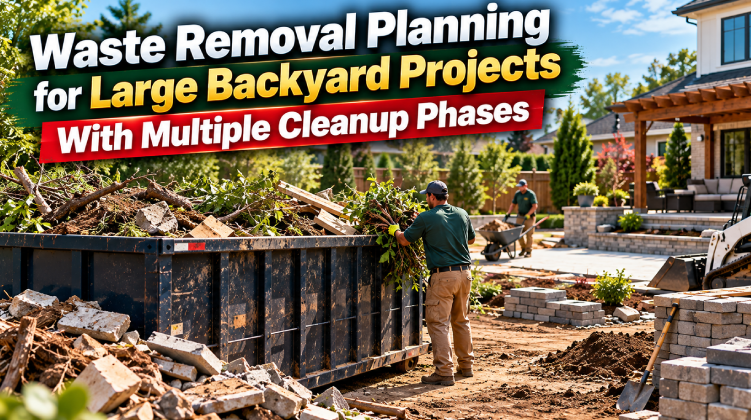

Large backyard projects can create several rounds of debris before the final landscape takes shape. Landscape contractors may remove brush, old fencing, sod, mulch, shrubs, tree limbs, landscape fabric, rotted wood, concrete edging, pavers, gravel, soil, stone, outdoor fixtures, and leftover construction materials in the same project. When that work happens in phases, waste removal has to be planned around the schedule instead of handled only at the end.
A backyard project can look organized on day one and crowded by day three if debris does not have a clear flow. Piles can block equipment, delay material deliveries, damage lawns, or get in the way of installation. A practical waste plan helps contractors keep each phase clean enough for the next phase to begin.
Start With the Full Backyard Scope
Before removal begins, contractors should review the entire backyard plan. A project may include clearing overgrowth, removing an old patio, replacing fencing, reshaping beds, preparing privacy features, building walkways, installing drainage, or creating new outdoor living space. Each part of the job creates different debris.
Organic materials such as shrubs, brush, roots, sod, and mulch may appear early. Hardscape debris such as pavers, gravel, concrete, edging, brick, and stone may come next. Later phases may add packaging, scrap lumber, cutoffs, excess soil, broken materials, and installation waste.
A full scope review helps contractors plan where debris will come from, where it should go, and when the biggest cleanup phases are likely to happen.
Break Cleanup Into Phases
Large backyard projects work best when cleanup follows the project sequence. If crews clear the entire yard and leave everything piled until the end, the site can become difficult to move through. If debris is removed in stages, each work zone can be reset before the next task begins.
A typical phased plan may start with brush and plant removal, then hardscape tear-out, then grading debris, then installation packaging, then final detail cleanup. Each phase should include a clear stopping point where debris is loaded, staged, or removed before crews move on.
This keeps the backyard from becoming one large mixed pile.
Choose Dumpster Placement Carefully
Dumpster placement is one of the most important choices on a multi-phase backyard project. The container should be close enough to reduce hauling time, but it should not block the driveway, gate, garage, sidewalk, delivery area, or equipment route. Backyard work often depends on narrow side-yard access, so placement needs to support that route.
Working with Waste Removal USA can help landscape contractors coordinate dumpster rental placement and service timing around larger backyard projects. A well-placed container gives crews a direct place for approved debris while keeping room open for new materials and daily work.
The best placement supports several phases, not only the first removal task.
Keep Access Routes Open
Large backyard jobs require repeated movement. Crews may carry debris out, bring plants in, haul soil, move wheelbarrows, transport tools, and operate compact equipment along the same route. If debris piles spill into that path, the whole job slows down.
Contractors should identify the main route from the backyard to the dumpster or staging area before work begins. Gates, side yards, patios, driveways, and walkways should stay clear. If the route crosses soft ground, temporary protection may help prevent ruts.
A clear route makes the project safer and reduces unnecessary handling.
Separate Organic and Hard Materials
Backyard projects often combine green waste with heavier construction debris. Branches, roots, sod, leaves, and mulch should not be mixed carelessly with pavers, nails, old lumber, concrete, gravel, metal edging, or broken fixtures. Mixed piles are harder to load and can hide sharp or heavy materials.
Contractors should create simple categories. Organic debris can be grouped separately from hardscape debris. Reusable materials should be staged away from waste. Questionable items should be set aside until disposal rules are confirmed.
Sorting early helps crews make faster decisions as the project progresses.
Plan for Heavy Debris
Large backyard projects often include dense materials. Pavers, stone, concrete, brick, gravel, soil, wet sod, and root balls can add weight quickly. A dumpster may still have visible space while already holding a heavy load.
Contractors should identify heavy debris during the first walkthrough. If the project includes patio removal, walkway removal, old retaining edges, large stones, or major grading, the disposal plan should account for weight. Heavy material may need to be loaded in stages instead of combined with lighter debris all at once.
Weight planning prevents the cleanup phase from becoming a bottleneck.
Coordinate With New Materials
A backyard renovation usually brings in new materials while old debris is still being removed. Plants, mulch, soil, fencing, lumber, pavers, gravel, lighting, drainage pipe, privacy screens, and outdoor fixtures all need clean staging areas. If debris is still sitting in those spaces, crews may have to move it twice.
Contractors should schedule cleanup before major deliveries arrive. New materials should be staged away from waste piles, wet debris, sharp scraps, and dusty removal areas. A driveway or side yard may need to serve as both a delivery area and a debris route, so timing matters.
Good coordination keeps installation from waiting on cleanup.
Support Privacy and Screening Features
Many large backyard projects include fences, hedges, trellises, lattice, pergolas, panels, or other screening features. Ideas like backyard privacy ideas often require clearing old materials before new elements can be installed. That may mean removing overgrown shrubs, broken fencing, old posts, landscape rock, brush, or outdated outdoor structures.
Contractors should clear these areas before new privacy materials arrive. Old posts, roots, concrete footings, and plant debris can interfere with layout and installation. Keeping the privacy zone clean helps crews measure, dig, align, and build without working around leftover waste.
Debris removal should prepare the space for the new design.
Control Brush and Plant Waste
Brush and plant debris can spread quickly if it is not reduced and contained. Removed shrubs, vines, ornamental grasses, small limbs, and root masses can fill a yard even when they are not extremely heavy. They can also block gates, walkways, and equipment access.
Crews should cut bulky green waste into manageable sections before loading. Thorny plants, vines, and tangled roots should be kept away from main paths. If brush is staged temporarily, it should be placed where it will not block the next phase.
Controlled green waste keeps the site cleaner and easier to navigate.
Manage Soil, Sod, and Roots
Soil, sod, and roots are common during backyard renovations. They can also be messy and heavy, especially after rain. Contractors should decide whether soil will be reused, regraded, removed, or kept separate from other debris.
Sod should be removed in manageable sections and staged only where it will not block work. Root balls can be shaken out when practical if usable soil can remain on-site. If soil or sod must leave the property, crews should watch container weight closely.
These materials deserve their own plan because they can overwhelm a cleanup faster than expected.
Reset the Site Each Day
Multi-phase backyard projects often last several days or longer. At the end of each workday, crews should load loose debris, clear access routes, secure tools, contain brush, and organize new materials. Even when the project is unfinished, the yard should look controlled.
A daily reset helps the next morning start smoothly. It also reduces complaints from homeowners or neighbors. If children or pets use any part of the yard, small debris such as nails, splinters, plastic pieces, and sharp scraps should be collected before crews leave.
Daily cleanup keeps the project from feeling neglected.
Adjust as the Project Changes
Backyard projects often reveal surprises. Crews may uncover buried concrete, old edging, extra gravel, hidden roots, irrigation parts, rotted posts, drainage issues, or more debris than expected. Weather can also change the plan by making soil heavier or access routes muddy.
Contractors should review debris needs after each major phase. If the dumpster is filling faster than expected, schedule service before the next phase begins. If a staging area needs to move, update the debris route before crews start carrying material through the wrong space.
Flexibility helps the waste plan match the real conditions on-site.
Avoid Common Cleanup Mistakes
One common mistake is clearing too much of the backyard before loading anything. This can create crowded work zones and extra handling. Another mistake is mixing organic debris with hardscape waste, which makes loading and sorting harder.
Contractors should also avoid placing debris where new materials need to go. A pile that seems convenient during tear-out may block fencing, planting, grading, or patio work later. The better approach is to remove debris steadily as each phase is completed.
Waste removal planning is essential for large backyard projects with multiple cleanup phases. Landscape contractors need to manage green waste, hardscape debris, soil, sod, roots, packaging, and installation scraps while keeping access routes open and new materials protected.
By reviewing the full scope, breaking cleanup into phases, choosing smart dumpster placement, separating materials, watching heavy debris, and resetting the site daily, contractors can keep backyard projects cleaner and more efficient. A strong waste plan helps each phase prepare the property for the next step instead of leaving crews to work around yesterday’s mess.